
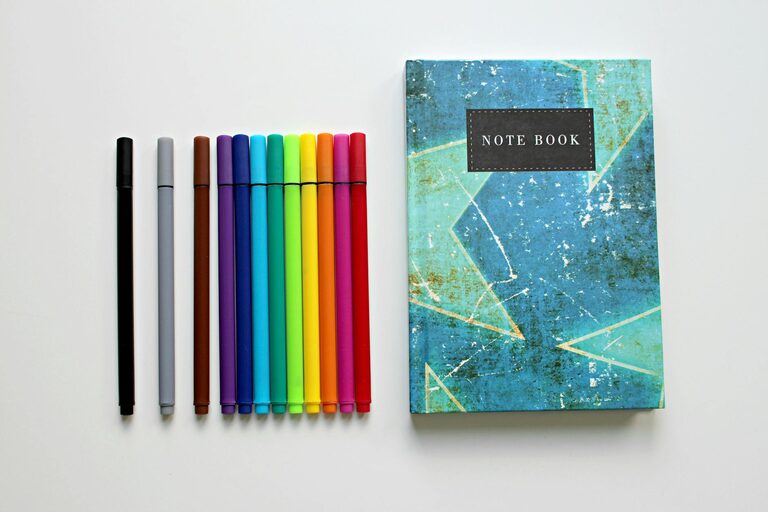
Choosing the right notebook can make a surprising difference in how often you use it. Whether you want to jot down ideas, keep a journal, or plan your week, a notebook that suits your preferences encourages you to open it regularly. With so many options available, though, finding “the one” can feel overwhelming. This guide will help you understand key factors to consider, so you pick a notebook you’ll actually enjoy using.
Why Choosing the Right Notebook Matters
Not all notebooks are created equal. Some are bulky, some have paper that bleeds through, others don’t lie flat, and some have layouts that don’t fit your style. When your notebook frustrates you, it quickly ends up untouched. But the right notebook can inspire creativity, help improve your organization, and become a trusted companion for your thoughts.
Knowing your needs and preferences is the first step toward finding a notebook that fits your lifestyle and encourages you to write more.
Step 1: Identify the Purpose of Your Notebook
Before shopping, decide what you mainly want to use your notebook for. This focus will guide your choices.
– Journaling: Daily entries, thoughts, and reflections
– Note-taking: For meetings, classes, or research
– Planning and organizing: Task lists, calendars, trackers
– Creative work: Sketching, doodling, brainstorming
– Idea capture: Quick notes on the go
Each purpose calls for different features such as page layout, size, and binding.
Step 2: Choose the Right Size and Portability
Notebooks come in many sizes. Think about where and how you’ll use yours.
– Pocket size (A6 or smaller): Great for carrying everywhere; best for quick notes and lists.
– Medium size (A5): Popular size; fits into bags easily and provides enough writing space.
– Large size (A4 or letter): Ideal for detailed notes, sketching; better for desk use.
If you move around often, a smaller, lightweight notebook might suit you best. For home or office use, a larger size can be more comfortable for extended writing.
Step 3: Select the Paper Type and Quality
Paper quality affects the writing experience. Consider the following:
– Thickness (measured in GSM): Higher GSM (around 90-120) means thicker paper, less bleed-through, and better for fountain pens or markers.
– Texture: Smooth paper feels different under the pen than textured; personal preference matters.
– Color: White, off-white, or cream paper can affect readability and comfort.
– Ruled, dotted, grid, or blank: Choose a layout that suits your writing or drawing style.
If you use gel pens or markers, test paper that won’t bleed or feather.
Step 4: Think About Binding and Durability
How a notebook is bound impacts how easily it opens and how durable it is.
– Spiral binding: Lies flat and folds back, good for quick writing but may be less durable.
– Thread-sewn: Often used in higher-quality notebooks; more durable and lays flat better over time.
– Glue binding (perfect bound): Gives a clean look but may not lie flat.
– Hardcover vs. softcover: Hardcovers protect pages and last longer; softcovers are lighter and more flexible.
Consider your environment and how harshly you treat notebooks before deciding.
Step 5: Look for Additional Features
Some notebooks come with extras that might enhance your experience:
– Page numbers or index: Helpful for organizing notes.
– Perforated pages: Easy to tear out.
– Pockets: Great for storing receipts or loose papers.
– Elastic closures and bookmarks: Keeps your notebook closed and marks your spot.
– Pre-printed templates: For planners or bullet journals.
These features can add convenience but may also increase the price.
Step 6: Choose a Style That Inspires You
Since you’ll be using this notebook regularly, pick one whose look appeals to you. Color, cover material, and design can motivate you to write. Whether it’s minimalist, colorful, or artistic, a notebook that suits your taste makes it more inviting.
Step 7: Set a Realistic Budget
Notebooks vary in price from inexpensive to luxury. Set a budget that fits your needs. Sometimes investing a bit more means better quality and a better experience, leading to more consistent use.
Step 8: Test Before You Commit
If possible, visit a store to hold and flip through notebooks. Try writing a few lines with your usual pen to check the paper quality. Seeing and feeling the notebook can help you decide more confidently.
Tips to Keep Using Your Notebook
– Carry it with you: Having your notebook handy encourages spontaneous writing.
– Make it a habit: Set aside time daily or weekly for journaling or note-taking.
– Personalize: Add stickers, washi tape, or doodles to make it yours.
– Use it for a specific project: This focus can motivate consistent use.
Final Thoughts
Choosing a notebook you’ll actually use is about matching it to your habits, preferences, and needs. Think about size, paper, binding, style, and function. With the right notebook in hand, you’ll find it easier and more enjoyable to capture your thoughts, plan your days, or simply create. Happy writing!